The Difference Between AI and Agentic AI (And What It Actually Means for Your Work)
Every few months, tech Twitter adopts a new phrase that makes everyone outside of Silicon Valley pause and wonder: Wait, aren't we still figuring out the last one?
Recently, that phrase is Agentic AI.
If your inbox or LinkedIn feed looks anything like ours, you’ve probably seen breathless predictions claiming that "software is dead" and "autonomous agents are taking over." But strip away the marketing fog, and the distinction between standard AI and agentic systems is actually straightforward—and genuinely important for how everyday operators, founders, and teams get work done.
The Familiar AI: The "One-Turn" Assistant
Most of the generative AI tools we’ve spent the last few years using—ChatGPT, Claude, Gemini—operate in a simple conversational loop:
You give it a prompt.
It generates a response in a single pass.
The conversation stops and waits for your next instruction.
Think of standard generative AI like an extraordinarily fast research intern who only answers the specific question you ask, but won’t take a single step forward until you tell them what to do next.
If you ask standard AI to draft a competitive analysis memo, it writes one based on patterns it learned during training. But if it makes a bad assumption, or if competitor pricing changed yesterday, it doesn't know. It can't browse your internal systems, double-check its own arithmetic, or fix its own mistakes on the fly. It gives you an 80% draft and leaves the rest of the heavy lifting to you.
As AI pioneer Andrew Ng famously described it, we’ve mostly been using these tools in "zero-shot" mode—asking a model to write an entire essay from start to finish in one breath, without giving it the chance to brainstorm, outline, critique, or revise.
The Shift: From Generating Text to Taking Action
Agentic AI isn’t an entirely new species of computer brain. Under the hood, it’s still powered by Large Language Models.
The difference isn't the brain itself; it’s the workflow around it.
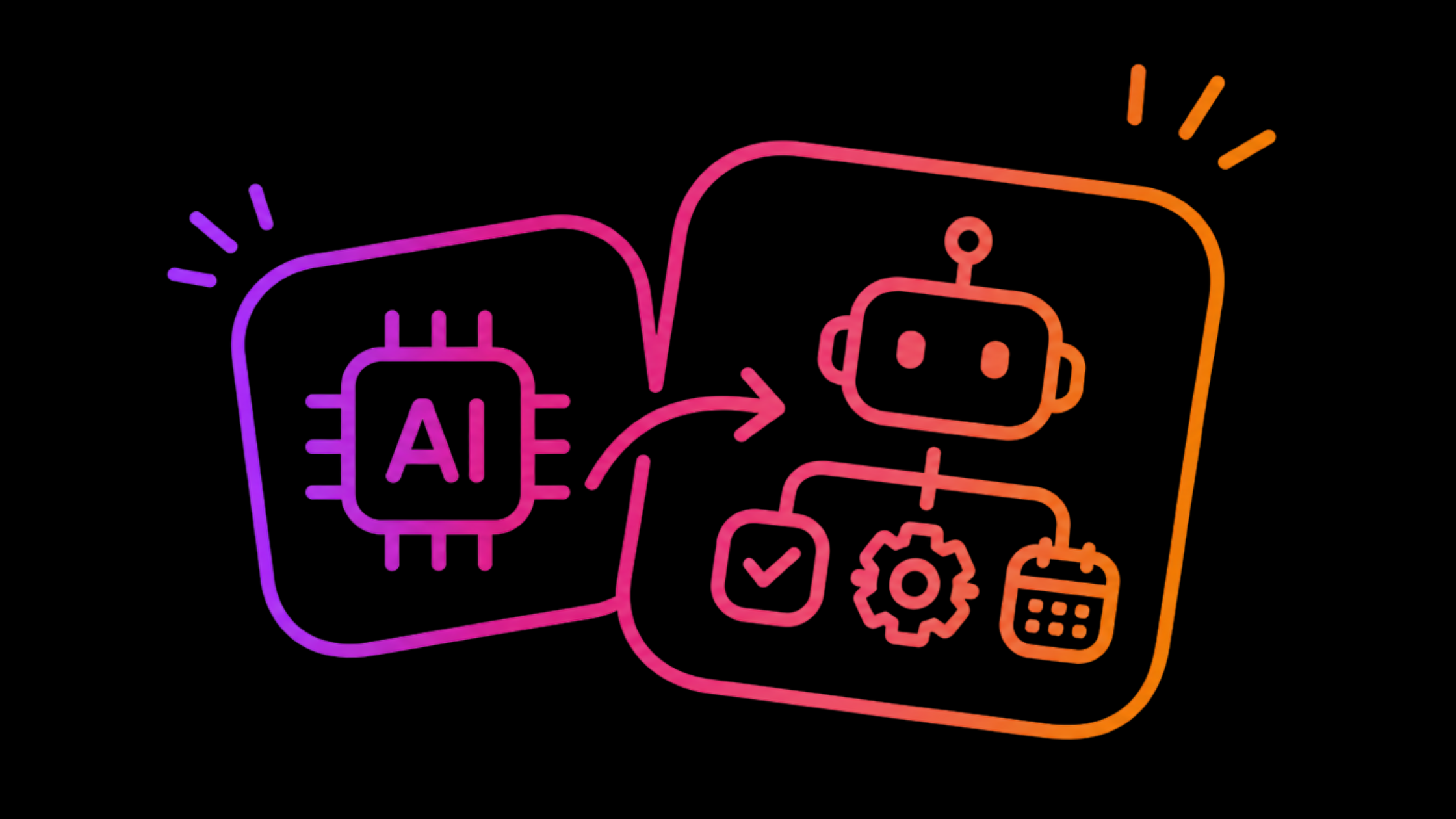
Instead of just answering a prompt, an agentic system is given a goal, a set of tools, and the autonomy to loop through multiple steps until it reaches the outcome.
Rather than:
"Write a summary of our competitor's pricing."
An agentic setup looks more like:
"Here is a list of our three main competitors. Check their live websites for pricing updates, compare the changes against our internal tier list in Google Sheets, flag any discrepancies, and draft a memo for the sales team."
An agentic system breaks that assignment into a checklist. It queries web tools, reads external documents, uses code interpreters to crunch numbers, checks its own work for logical errors, and iterates across several steps without asking you for permission at every comma.
Nvidia CEO Jensen Huang framed this evolution cleanly:
"Finally, AI is not just interesting, but it is doing productive work that's valuable... AI has moved from generative AI to agentic AI."
The 4 Habits of an "Agentic" System
You don't need a computer science degree to evaluate whether something is truly agentic. Andrew Ng points out four practical design patterns that turn passive language models into active agents:
Reflection (Self-Correction): The AI looks at its own intermediate work, spots bugs or weak arguments, and revises them before handing you the final deliverable.
Tool Use: The AI connects to external tools—like web search, local files, Python code interpreters, or internal databases—to fetch ground-truth facts instead of guessing.
Planning: Instead of answering immediately, the system maps out a sequence of sub-tasks: First I need to gather the data, then I need to format it, then I need to verify it.
Collaboration: Multiple specialized agents work together like a mini-team (for instance, one agent writes the code, a second agent tests it for vulnerabilities, and a third refines the user interface).
The Reality Check: Autonomy Doesn't Replace Human Judgment
Here is where the conversation usually gets derailed. People hear "autonomous" and assume they can hand over their entire job, walk away, and come back to perfect results.
In reality, the shift from prompt-based AI to agentic workflows reveals a familiar truth: technology only provides real leverage if someone knows how to steer it.
When an AI model operates across five or six sequential steps, subtle errors can compound. A system that hallucinates a tiny detail in Step 1 might build an entirely broken strategy by Step 5. A team that doesn't understand the underlying business problem won't be able to spot when an agent goes subtly off the rails.
As tools get more capable of taking independent action, domain expertise actually matters more, not less:
An agent can write code, but an experienced builder knows whether that architecture will break in production.
An agent can draft five customer outreach cadences, but a seasoned marketer knows which voice will actually resonate with the customer.
An agent can compile financial data across ten spreadsheets, but an operator has to decide whether the strategic conclusions make practical sense.
How to Think About This for Your Own Work
You don’t have to wait for an enterprise IT rollout to start benefiting from agentic patterns. Even in daily work, you can shift from passive prompting to agentic execution right now:
Stop asking for one-shot answers. Ask the model to generate a plan first, critique its own ideas, and revise the output before you accept it.
Connect it to live context. Move beyond the empty chat box by integrating tools that read your real files, repositories, or messy notes.
Focus on the 20% that matters. Don't try to build a massive, fragile autonomous system that tries to do everything. Find the one repetitive, multi-step chore eating up your afternoons—like formatting messy reporting data or triaging customer inquiries—and give the tool the bounds to handle it reliably.
The goal of modern AI was never to churn out more generic text faster. It’s about building practical leverage so you can spend less time babysitting busywork and more time making the decisions that count.
At Hiype, we believe you don’t learn applied AI by watching recorded webinars or memorizing generic prompt lists. Whether you’re an operator automating a team bottleneck, an entrepreneur building a custom app, or a professional looking for real daily leverage, Hiype connects you 1:1 with vetted practitioners to build working solutions directly on your real projects.